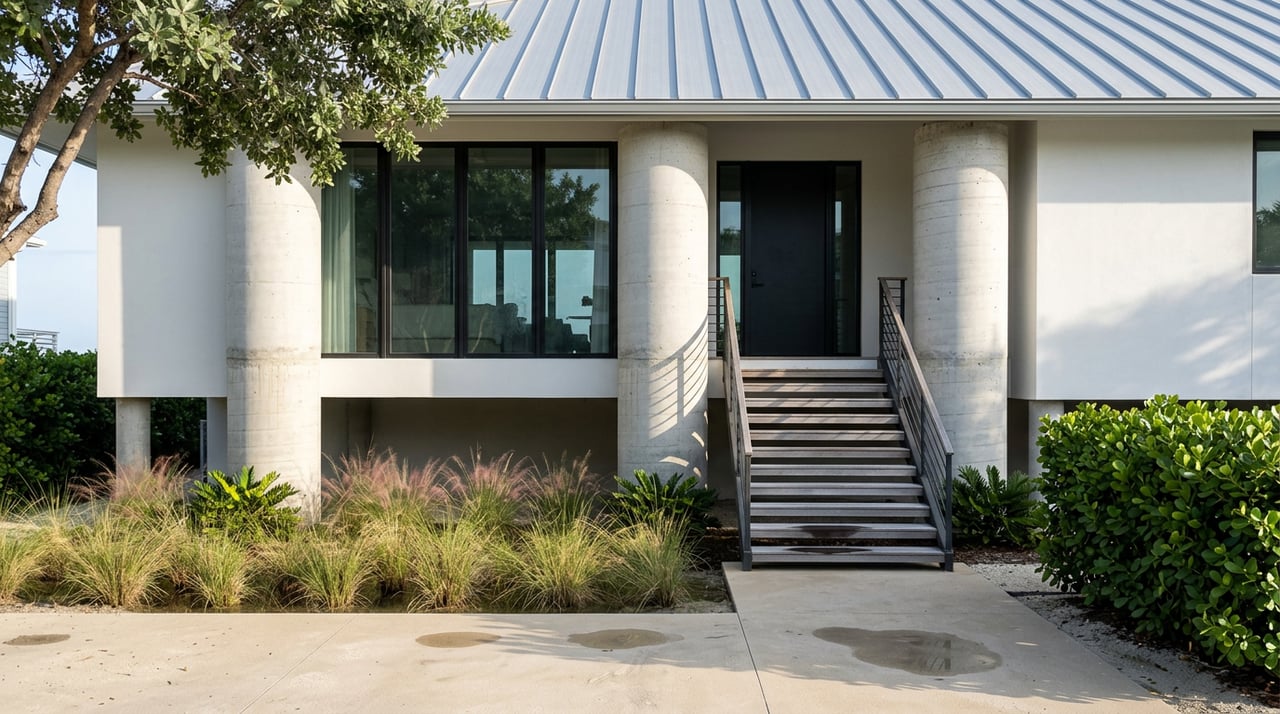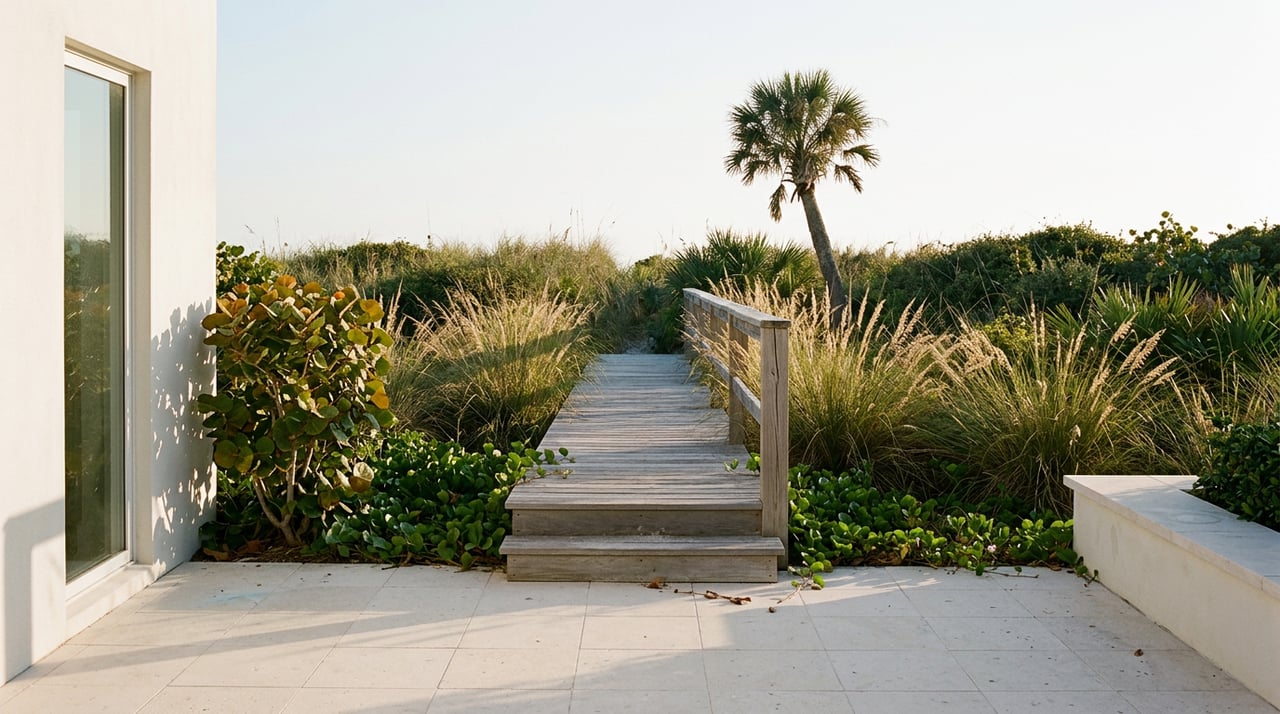
Walk the stretch of sand in front of the Plaza Beach Motel this summer and you will likely pass a hand-lettered sign warning you off the dry sand, maybe a length of rusted rebar with an orange flag, maybe a fresh wooden post someone installed after the last one got pulled up. If you have lived on St. Pete Beach for more than a few months, you already know the signs did not appear all at once. They have been going up, coming down, and going back up in slightly different form since spring.
Most residents assume the city eventually settled this. A commission voted, an ordinance passed, the story moved on to the next agenda item. That assumption is the thing worth correcting. The ordinance St. Pete Beach adopted this summer regulates where a sign or stake can physically sit. It says almost nothing about who is legally allowed to be on the sand behind it, and the city wrote that limitation into the ordinance on purpose.
The Ordinance Everyone Thinks Settled This
The timeline moves faster than most local disputes, which is part of why it is easy to lose track of what was actually decided at each step.
| Date | What happened |
|---|---|
| April 28, 2026 | Commissioners pass an emergency ordinance ordering the removal of signs, stakes, and rebar within 50 feet of the visible water line, citing safety hazards. |
| June 23, 2026 | Commissioners adopt Ordinance 2026-11 on final reading, making the 50-foot no-post buffer permanent while still allowing removable A-frame signs outside that zone under a permit process. |
| July 23, 2026 | The city holds a public seminar on Florida's customary use doctrine at City Hall on Corey Avenue. |
| Early August 2026 | Plaza Beach Motel and Undertow Beach Bar file a federal lawsuit challenging the ordinance as unconstitutional. |
| August 19, 2026 | The city's deadline, after a court-approved extension, to file its formal response. |
Notice what sits in the middle of that timeline and what does not. The ordinance itself addresses physical hazards: rebar sticking out of the sand at night, wooden posts, permanent structures within 50 feet of the Gulf. Property owners who want to post any sign now have to submit a deed, a title history, proof of insurance, and a survey showing exactly where it will sit. That is a real, enforceable change. City Attorney Ralf Brookes was direct about what the vote was and was not addressing. As he put it during the June meeting, "nothing in the sign code shall supersede, negate or infringe upon Florida's customary use doctrine." The city built an explicit disclaimer into its own ordinance, stating that regulating sign placement does not touch the underlying question of who has the right to use the sand.
The Doctrine No One Has Actually Tested Here
That underlying question is Florida's customary use doctrine, and it is older and narrower than most beach conversations assume. It traces back to a 1974 Florida Supreme Court decision, City of Daytona Beach v. Tona-Rama, which recognized that a privately titled dry-sand beach can still be subject to public recreational rights if the public's use of that specific stretch has been longstanding, reasonable, and never seriously disputed.
The word that matters is specific. Customary use is not a blanket rule that applies to every beach in Florida, or even to every stretch of St. Pete Beach. It has to be proven parcel by parcel. Brookes made that limit explicit at that July seminar, telling residents that even a long run of shoreline will not automatically qualify. Only the portion someone can actually document, he said, counts.
That framing lines up with a federal ruling from June 2026 involving Palm Beach, where a judge found the town had established customary use, but only over a specific 0.4-mile stretch, and only after the town built a documented record for that exact segment. The ruling did not extend to the rest of the Florida coastline, and it would not automatically extend to a stretch of St. Pete Beach either. Whatever legal status your favorite spot in front of a particular hotel has, it is not something the city's summer ordinance determined one way or the other.
St. Pete Beach has been here before. Years back, the Silver Sands Beach and Racquet Club condominium association challenged an earlier version of the city's customary use ordinance. That case settled before a judge ever ruled on the merits, the city repealed the ordinance it had passed, and the condominium kept its existing private property signage in place. The pattern that produced was ambiguity, not clarity, and there is no obvious reason the current fight resolves any differently. A federal filing due August 19 could bring a ruling, a settlement, or years of continued litigation, the same three outcomes that were on the table in June.
What Actually Changed and What Didn't
It helps to separate the two categories plainly, because the sign ordinance and the rights question keep getting talked about as if they are the same fight.
What the ordinance changed:
- Permanent stakes, poles, and posts within 50 feet of the mean high water line are prohibited, closing off the rebar-and-wooden-post approach that businesses including Plaza Beach Motel had used earlier this year.
- Any sign placed beyond that buffer now requires a city permit, a survey, and proof of ownership before it goes in the sand.
- Signs must sit at least 300 feet apart on the same zoning lot, which limits the kind of stacked "No Trespassing / No Alcohol / No Pets" displays that drew complaints from residents like Deborah Schechtman earlier this year.
What it did not change:
- No court or ordinance has determined whether the public has established customary use rights over any specific stretch of St. Pete Beach's dry sand.
- A hotel can still place a compliant A-frame sign outside the 50-foot buffer, meaning residents should expect to keep seeing private property signage this fall, just in a different physical form than the rebar era.
- The federal lawsuit brought by Plaza Beach Motel and Undertow Beach Bar remains unresolved, with the city's response due days from now.
A sign, in other words, tells you what a property owner is claiming. It does not tell you what a court has confirmed. Those are different facts, and the summer's ordinance was careful to keep them that way.
Why the Fight Escalated Now
None of this happened in a vacuum. Commissioner Karen Marriott offered the most useful frame for why a decades-old legal doctrine suddenly became the subject of emergency ordinances and federal filings in a single year. For decades, she said, people were pretty good at getting along on this beach. What changed is not the law. What changed is density: more visitors, more beachfront rental activity, and more people occupying the same amount of sand than in years past. The signs are a visible symptom of that pressure, not a self-contained legal dispute that appeared out of nowhere.
That context matters for anyone who plans to keep walking this beach through the fall and into the winter high season, when crowding typically increases again. Expect more signage, not less, as businesses respond to the same pressures that produced the rebar in the first place. Expect the permit process to slow that signage down and make it more traceable, since every new sign will now carry a deed and survey behind it. And expect the actual legal question, whether the public has customary use rights along any particular stretch, to stay open at least through the city's August 19 filing deadline and likely well beyond it.
If you live here, the practical move is not to treat a sign as the final word, and it is not to treat the ordinance as the final word either. Both are checkpoints in a fight that has been building since spring and shows no sign of resolving by Labor Day.
If you are thinking through what any of this means for a specific address, whether you are watching a listing near the Plaza Beach corridor or trying to understand how a stretch of beachfront actually functions day to day, that is a conversation worth having with someone who follows this market closely. Paul Simon has been tracking St. Pete Beach's coastline long enough to know the difference between a claim and a settled right. Let's Connect.